
Description
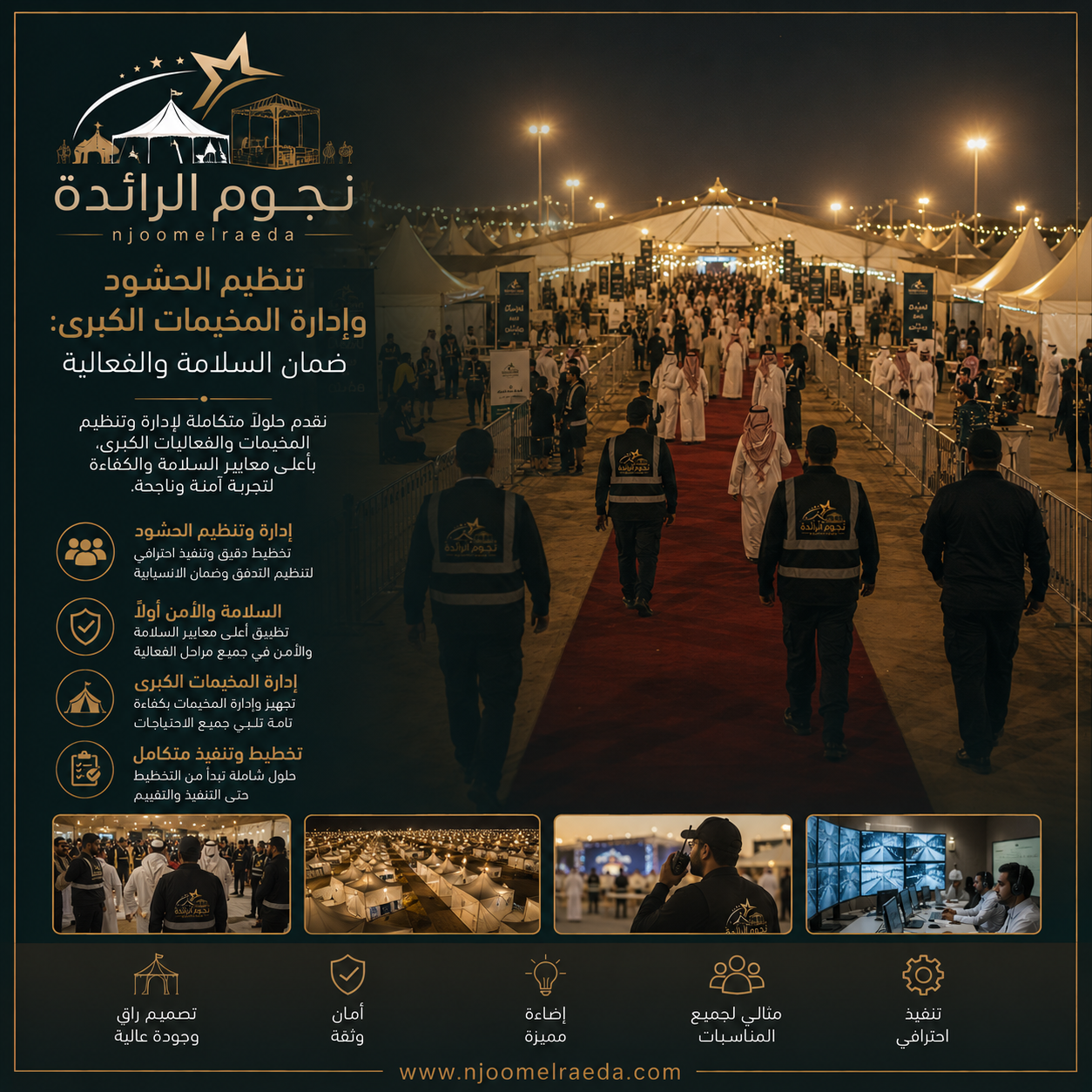
Crowd management and large camp operations are among the most critical factors in the success of major events that attract thousands—or even millions—of visitors, such as Hajj and Umrah seasons, national festivals, international exhibitions, and large sporting events. The primary objective is to ensure public safety, facilitate smooth movement, and create a well-organized environment while delivering a positive experience for every attendee.
Poor crowd management can lead to anything from inconvenience and congestion to serious safety incidents, making professional planning and flawless execution absolutely essential.
A Comprehensive Approach to Crowd Management
Crowd management goes far beyond directing people from one location to another. It is a multidisciplinary practice that combines strategic planning, risk management, behavioral psychology, engineering principles, and operational excellence to create a safe and comfortable environment.
Its core objectives include:
1. Safety & Security as the Highest Priority
The foremost goal is preventing overcrowding, accidents, and injuries while ensuring a rapid and effective emergency response.
This involves:
Comprehensive risk assessments
Detailed emergency response plans
Trained security personnel
On-site medical and first-aid teams
Safety extends beyond physical protection to include creating an environment where visitors feel secure and confident.
2. Smooth Crowd Flow
Efficient crowd management ensures visitors move safely and comfortably through:
Entry and exit points
Walkways
Queue areas
Gathering spaces
This requires careful analysis of pedestrian movement patterns, clear circulation routes, and effective directional signage to reduce congestion and maximize space utilization.
3. Enhancing the Visitor Experience
A well-managed crowd contributes significantly to visitor satisfaction by:
Reducing waiting times
Providing clear information
Offering comfortable facilities
Maintaining organized environments
Additional amenities such as rest areas, drinking water stations, and adequate sanitation facilities further improve the overall experience.
4. Compliance with Regulations
Event organizers must comply with both local and international safety standards governing crowd management.
In Saudi Arabia, organizations such as:
General Entertainment Authority (GEA)
General Directorate of Civil Defense
Ministry of Hajj and Umrah
establish and enforce regulations to ensure the highest levels of safety and operational efficiency.
Large Camp Management: Integrated Logistics Planning
Managing large temporary camps requires meticulous planning and seamless coordination among multiple stakeholders.
Key operational components include:
1. Site Planning & Space Design
Successful camp operations begin with intelligent site planning that ensures:
Easy accessibility
Efficient traffic flow
Proper allocation of facilities
Emergency evacuation readiness
Planning includes:
Tent layouts
Main and secondary pathways
Medical stations
Restrooms
Prayer areas
Emergency assembly points
Entry and exit gates
Capacity planning is also essential to prevent overcrowding.
2. Temporary Infrastructure
Reliable temporary infrastructure is fundamental to successful camp operations.
This includes:
Accommodation
High-quality fire-resistant tents
Climate control systems
Comfortable living arrangements
Sanitation Facilities
Clean restrooms
Hygiene stations
Accessible washing facilities
Medical Services
First-aid centers
Mobile clinics
Emergency response units
Utilities
Drinking water distribution
Continuous electrical supply
Backup generators
Waste Management
Efficient sewage systems
Waste collection
Recycling solutions
Environmental cleanliness
3. Communication Systems
Reliable communication networks ensure smooth coordination between all operational teams.
These include:
Two-way radio systems
Internet and Wi-Fi connectivity
Public Address (PA) systems
Dedicated communication platforms
Central command centers
4. Professional Workforce
Highly trained personnel are essential for successful crowd management.
Operational teams typically include:
Crowd stewards
Security officers
Medical response teams
Maintenance staff
Cleaning crews
Technical support teams
Each team must be fully trained in emergency procedures and visitor communication.
5. Clear Signage & Wayfinding
Well-designed multilingual signage helps visitors navigate safely and efficiently.
Signage should clearly indicate:
Directions
Emergency exits
Service areas
Medical facilities
Gathering points
Safety instructions
Universal symbols should be used whenever possible.
Technology in Crowd Management
Modern technology has transformed crowd management by improving operational awareness and real-time decision-making.
Key technologies include:
1. Smart CCTV & Video Analytics
AI-powered surveillance systems monitor crowd movement, detect congestion, identify unusual behavior, and automatically alert operations teams when intervention is required.
2. Electronic Counting Systems & Smart Sensors
Smart sensors accurately monitor occupancy levels at:
Entrances
Exits
Critical gathering areas
This helps maintain safe capacity limits throughout the event.
3. Mobile Applications
Dedicated event applications provide visitors with:
Interactive maps
Event schedules
Safety alerts
Available services
Emergency reporting features
Operational teams use mobile platforms for communication, task management, and resource coordination.
4. Drone Surveillance
Drones provide aerial monitoring to:
Assess crowd density
Identify congestion points
Support emergency response
Monitor large event areas in real time
5. Indoor Positioning Systems (IPS)
Indoor navigation technologies enable accurate positioning inside exhibition halls, camps, and large facilities where GPS signals may be limited.
Technologies include:
Bluetooth Low Energy (BLE)
Wi-Fi positioning
RFID systems
6. Augmented Reality (AR) & Virtual Reality (VR)
Immersive technologies support:
Emergency response training
Staff simulations
Visitor navigation
Operational planning
Regulatory Framework & Compliance
Large-scale crowd management follows strict local and international standards.
Major regulatory authorities in Saudi Arabia include:
General Entertainment Authority (GEA)
General Directorate of Civil Defense
Ministry of Hajj and Umrah
Organizations also follow internationally recognized best practices and standards, including ISO guidelines for event safety and crowd management.
Risk Assessment & Emergency Planning
Comprehensive risk management is a cornerstone of successful crowd operations.
Risk Assessment Process
Hazard identification
Risk analysis
Impact evaluation
Mitigation planning
Potential risks include:
Overcrowding
Fire
Technical failures
Natural disasters
Security incidents
Emergency Response Planning
A complete emergency plan should include:
Evacuation routes
Assembly points
Emergency contact procedures
Incident response protocols
Public communication plans
Staff training and emergency drills
Regular simulations ensure operational readiness.
Best Practices for Crowd & Camp Management
Successful operations are built upon internationally recognized best practices, including:
Early and comprehensive planning
Strong collaboration among all stakeholders
Continuous staff training
Regular performance evaluations
Ongoing improvement of emergency procedures
Integration of advanced technologies for monitoring, communication, and operational control
By combining strategic planning, experienced personnel, modern technology, and rigorous safety standards, organizations can deliver large-scale events that are not only efficient and well-organized but also safe, enjoyable, and memorable for every participant.
Reviews
There are no reviews yet.